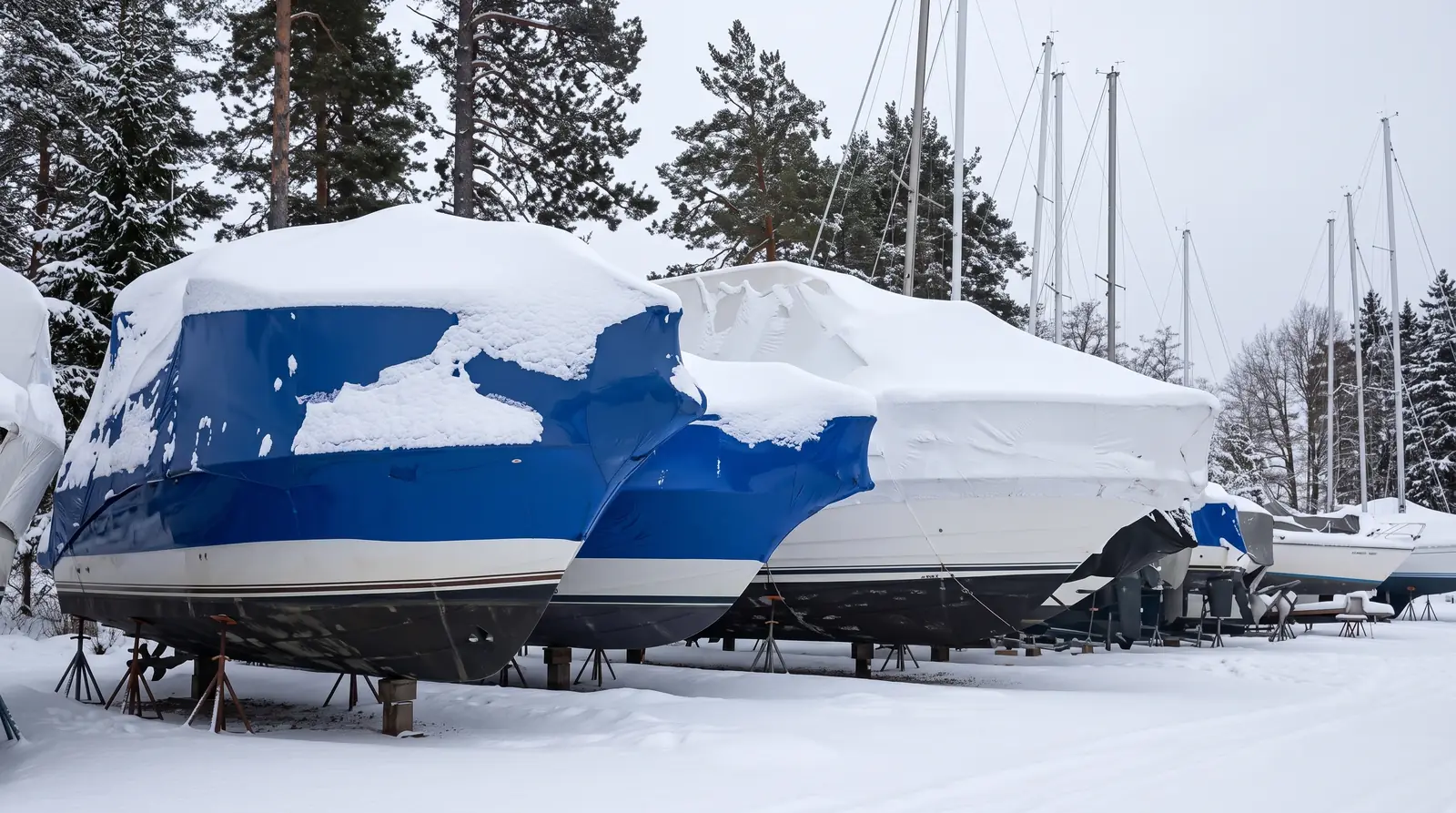
Shrink wrap keeps snow, rain and ice off a boat all winter. But a tight plastic cover can also trap moisture inside, and some owners pull the wrap off in spring to find mildew on the cushions, a musty cabin or black spots on the vinyl. The fix is mostly about ventilation and prep. Here’s how to keep a wrapped boat dry through a Georgian Bay or Lake Simcoe winter, whether it’s stored in Penetanguishene, Tay Township or Orillia.
Why moisture builds up under shrink wrap
Shrink wrap is waterproof, which is the point. But that also means moisture that’s already in the boat, or that gets in later, has a hard time getting out.
Moisture under a wrap usually comes from:
- Water left on board in the bilge, lockers, carpet or cushions when the boat was wrapped
- Damp air sealed in on a humid or rainy day
- Temperature swings that cause condensation on the underside of the plastic, which then drips back down
- Small leaks at seams, tears or poorly sealed straps that let snowmelt in
Add darkness and still air, and you have the conditions mould likes. On southern Georgian Bay and around Lake Simcoe, winter brings plenty of freeze-thaw cycles, especially in late fall and early spring, and each warm spell can produce condensation.
What vents do
Vents are small plastic fittings set into the wrap, usually with a hood that keeps rain and snow out while letting air move. They let damp air escape and fresh air in, which reduces condensation and keeps the inside of the cover closer to the outside air.
A wrap with no vents is more likely to drip and grow mildew. A wrap with good venting usually comes off in spring with a dry, fresh boat underneath.
How many vents does a boat need?
There’s no single number that fits every boat. It depends on size, cabin layout and how the boat is stored. As a general guide:
- Smaller open boats and runabouts often get a couple of vents
- Larger boats, cruisers and boats with cabins get more, spread along the length
- Sailboats need venting along the full cover, especially with the mast up
Placement matters as much as count. Vents work best when some sit lower on the sides and some higher up, which helps air move through instead of pooling. A good installer will set them where they’ll do the most good for your specific boat.
Ask about venting when you book boat shrink wrapping. It’s usually a small add-on and one of the cheapest ways to avoid a mouldy spring.
Prep that matters more than vents
Vents help moving air carry moisture out. They can’t dry out a boat that was wrapped soaking wet. The most important work happens before the plastic goes on.
Dry the boat thoroughly
- Pump and sponge the bilge dry
- Wipe down the cockpit, lockers and cabin surfaces
- Pull up wet carpet or floor mats to dry
- Make sure the deck is dry before wrapping, rather than wrapping right after rain
Take soft things home
Cushions, life jackets, towels, sails and canvas hold moisture and are the first things to grow mildew. If you can, take them home for the winter, or at least prop cushions on edge so air reaches both sides.
Clean before you cover
Dirt, food crumbs and fish scales feed mould. A good clean of the interior, cooler and storage areas before wrapping makes a big difference.
Winterize the systems
Proper boat winterizing drains water from the engine, water tanks, lines and heads. Besides protecting against freeze damage, it removes standing water that could otherwise add to the humidity under the cover.
Moisture absorbers
Moisture-absorbing containers or bags placed in the cabin and lockers can help, especially on boats with enclosed spaces. They’re not a substitute for venting and drying, but they’re a useful extra.
Wrap design that keeps water out
How the wrap is built affects moisture too.
- Steep enough pitch. The cover needs enough slope that snow slides off and water runs away rather than pooling.
- Solid support structure. A good frame keeps the cover tight and prevents sagging pockets where water can sit and leak in.
- Sealed seams and strap points. Tape and heat-sealed seams keep snowmelt out.
- Padded contact points. Padding at sharp corners, rails and the windshield stops chafing that leads to tears later in the winter.
- Access door, if you’ll need it. A zippered door lets you get inside to check the boat without cutting the plastic.
Checking a wrapped boat over winter
A quick check after a heavy snowfall, big wind or long thaw goes a long way.
- Look for tears, rubbing spots or loose straps.
- Check for sagging areas where snow or water is pooling.
- Clear heavy snow gently with a soft broom if it’s building up; don’t use anything sharp.
- If you have an access door, peek in for condensation, drips or a musty smell.
- Patch small tears right away with shrink-wrap tape, before wind makes them bigger.
If your boat is stored at a marina, ask whether they check wrapped boats after storms and how they handle repairs. Yards wrapping many boats at once may handle this differently from a single boat wrapped at home; see marina shrink wrap for how multi-boat jobs usually work.
Local conditions in Penetang, Tay and Orillia
Boats stored around Penetanguishene and Penetang Bay often sit near the water, where damp air and wind are part of the picture all winter. In Tay Township, many boats are stored on trailers at home, sometimes under trees where dripping branches and leaf litter add moisture. Around Orillia, boats on Lake Couchiching and Lake Simcoe see the same freeze-thaw swings, especially in March.
Wherever your boat is stored, the basics are the same: wrap it dry, vent it well, and check it after big weather.
What it costs
Boat shrink wrapping typically runs about $12–$25 per foot, with smaller boats toward the low end. Doors, vents and in-water wrapping are usually extra. Winterizing is typically $100–$300 for outboards and $250–$800 for sterndrives and inboards, with water systems adding roughly $75–$150. These are general ranges, not quotes.
Quick answers
Why is there mould on my boat after shrink wrapping?
Usually because moisture was trapped when the boat was wrapped, or condensation built up with no way to escape. Drying the boat fully, removing cushions and soft items, and adding vents to the wrap are the best ways to prevent it.
Do I really need vents in my shrink wrap?
For most boats, yes. Vents let damp air escape and reduce condensation, which helps prevent mildew and odours. They’re a small add-on compared to the cost of cleaning or replacing mouldy cushions and upholstery.
Should I check my shrink-wrapped boat during the winter?
Yes. After heavy snow, strong wind or a long thaw, look for tears, loose straps and pooling. Patch small holes right away. If you have an access door, check inside for condensation or a musty smell.
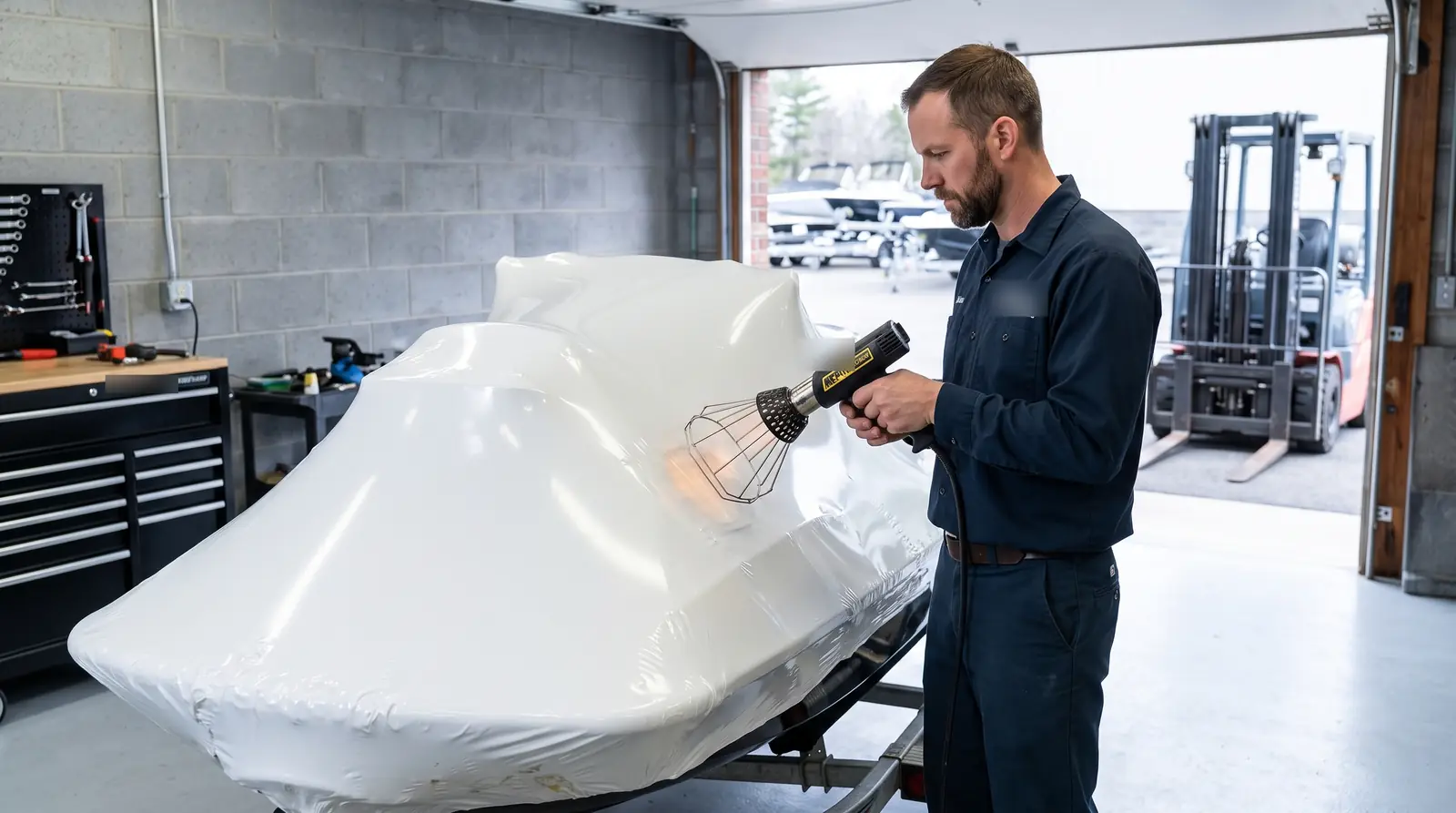 Mobile shrink wrapping
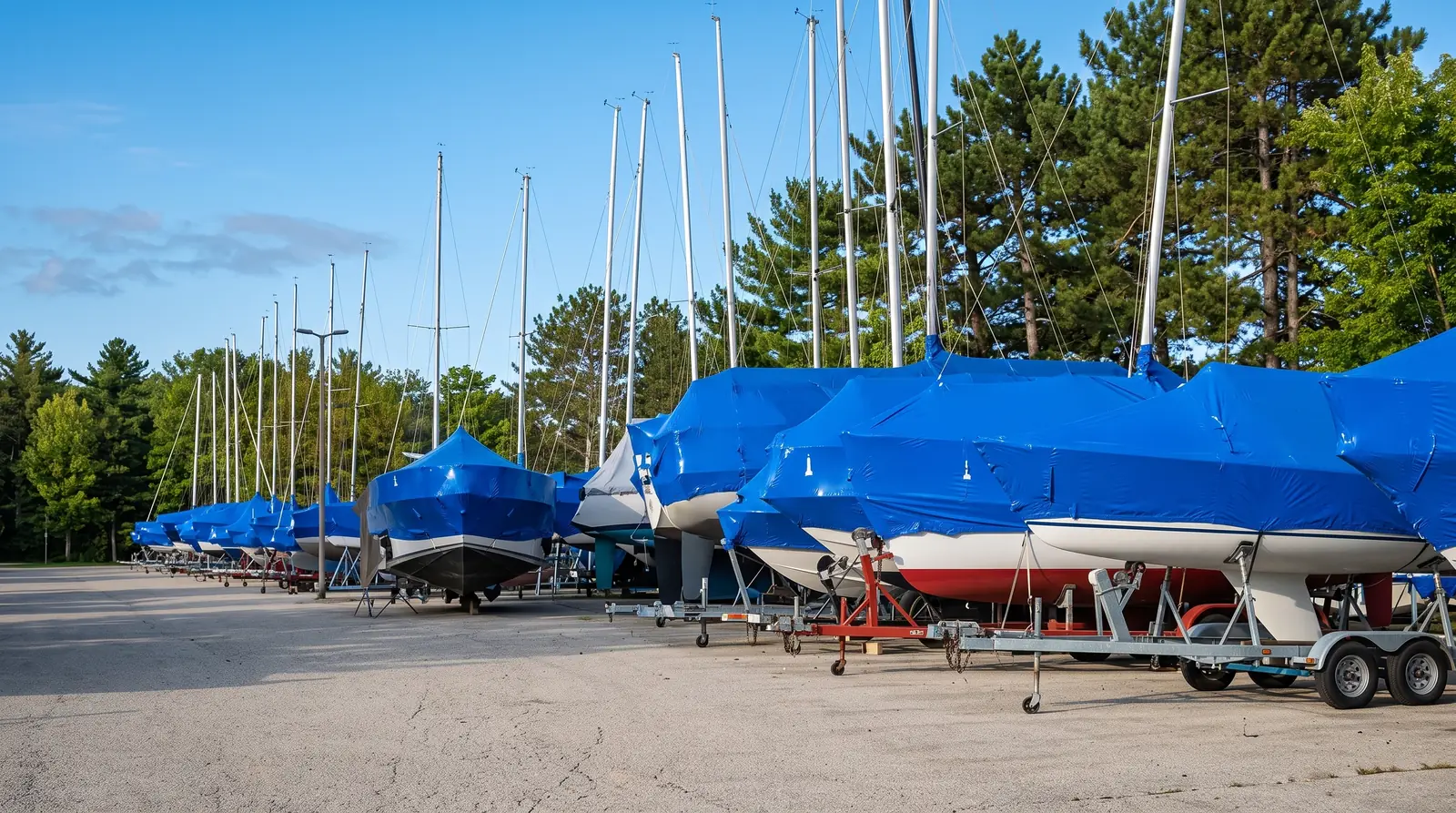 Marina & yard wraps
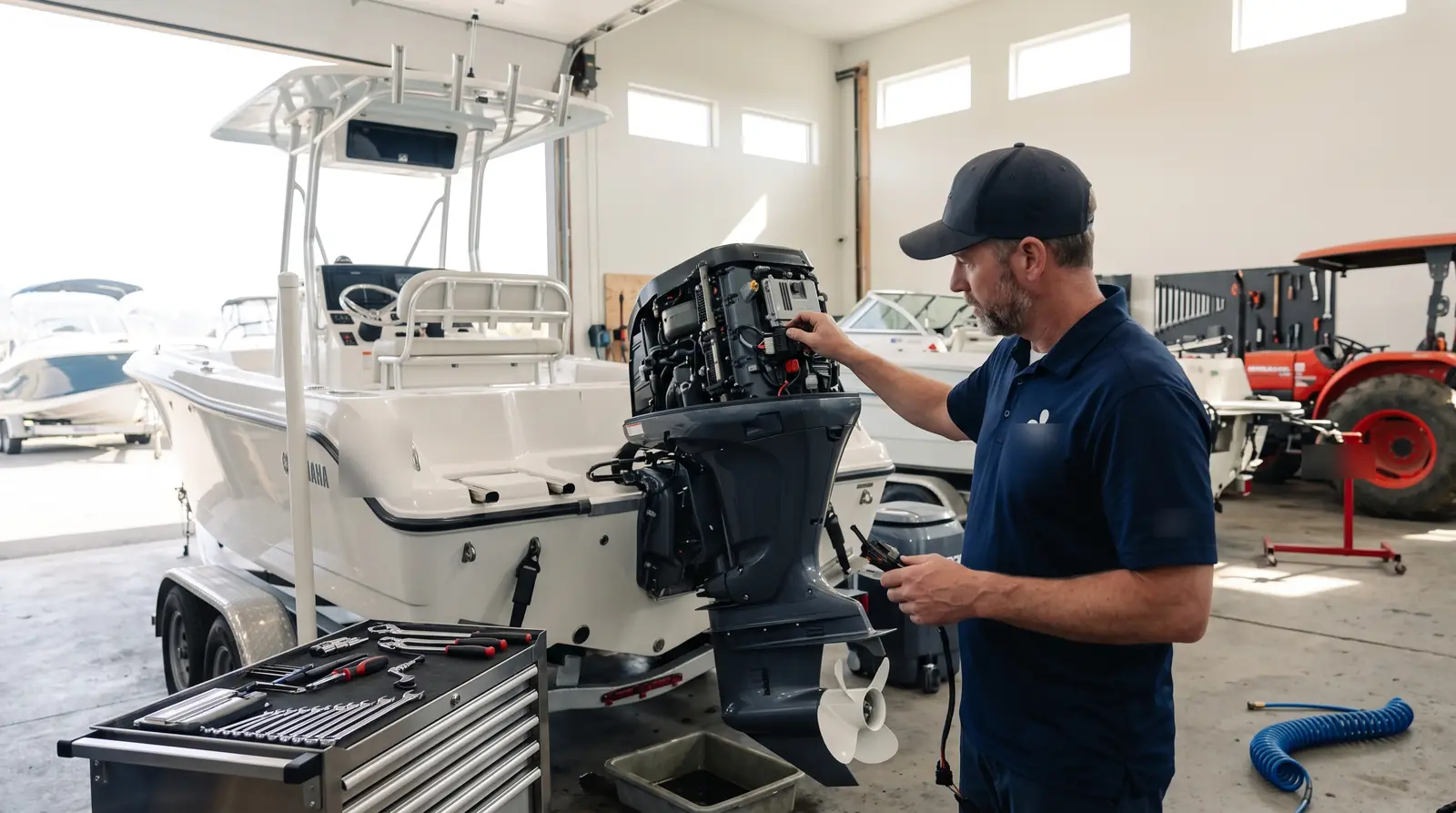 Engine winterizing