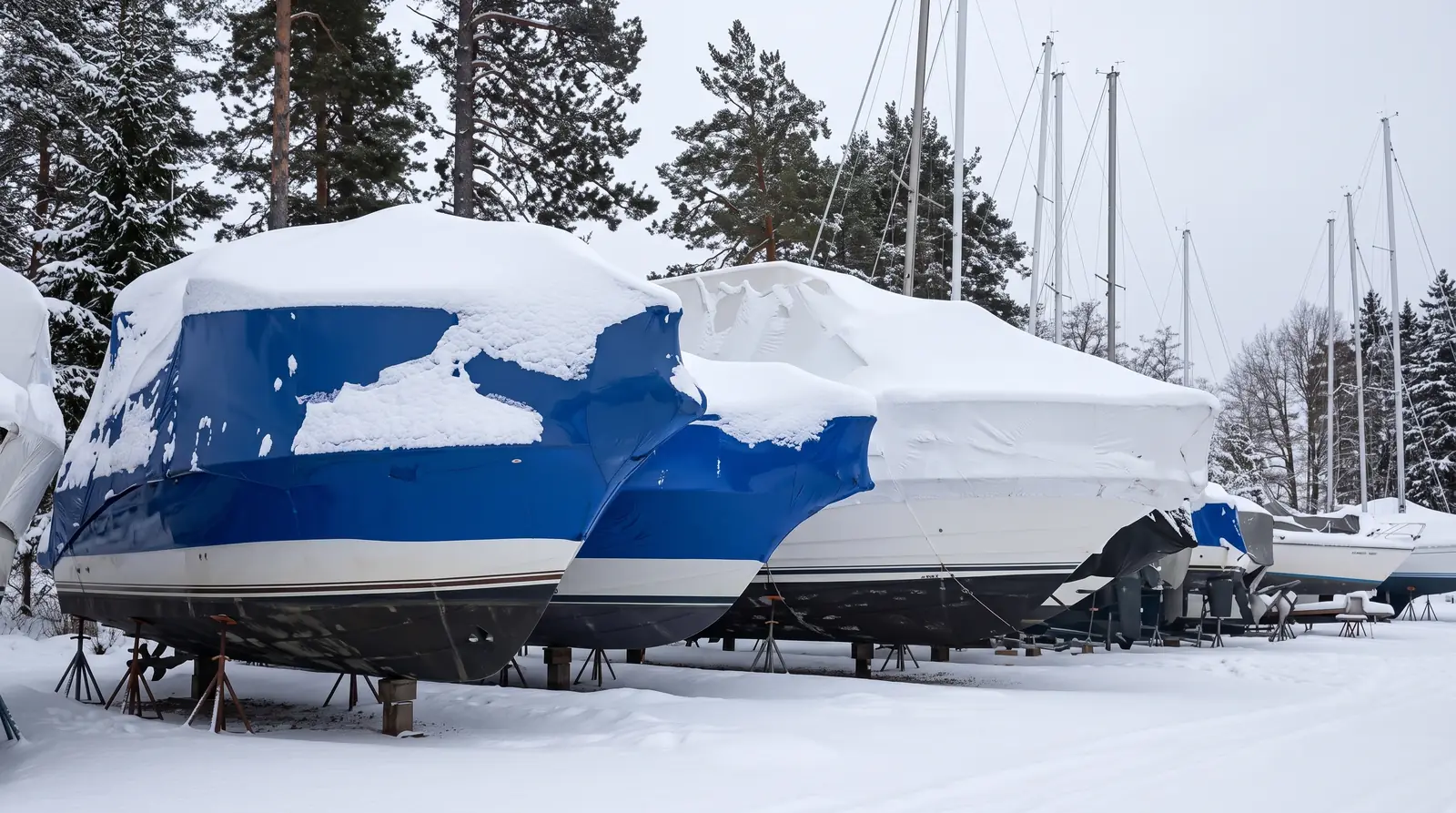
Shrink wrap is tough, but a Georgian Bay winter tests it. Lake-effect snow, freezing rain and strong winds off the bay can leave a cover sagging, ponding or torn. A quick look after each big storm catches small problems before water, snow or animals get inside.
Here’s what to check after a storm, what you can fix yourself, and when to call for help, whether your boat is stored in your driveway in Wasaga Beach, in a yard in Collingwood or at a marina near Midland or Tay.
Why winter storms are hard on shrink wrap
A good wrap job is built to shed snow and handle wind. The frame or support structure gives the cover a peaked shape so snow slides off, and the plastic is shrunk tight so it doesn’t flap.
Problems usually start when one of those things changes:
- Heavy, wet snow sits on flatter areas instead of sliding off
- Freezing rain adds weight and makes snow stick
- Strong winds find any loose edge and work it back and forth
- Thaw and refreeze cycles turn snow into ice, then into pooled water
- Falling branches puncture the cover
Each of these can stretch, sag or tear the plastic. A small tear in December can be a big flap by February.
When to check
The timeline is simple: check the wrap after heavy snow or strong winds, all winter long. In practice, that means:
- After any snowfall that leaves a deep layer
- After freezing rain or an ice storm
- After a wind warning or a storm with strong gusts
- During a mid-winter thaw, when snow turns to slush and water
- At least once a month, even if the weather has been calm
If your boat is stored at a marina or in a yard, ask how they handle checks. Many yards walk their rows after big storms, but it’s still worth asking.
What to look for
Walk all the way around the boat, then look at the top from a step ladder if you can do it safely. Don’t climb onto the boat or the cover.
Sagging and ponding
Look for low spots where the plastic dips between supports. These collect snow and water, and the weight stretches the plastic further. Over time, a sag can turn into a pool of water or a block of ice sitting on the cover.
Tears, holes and punctures
Check the whole cover, especially:
- Along the frame or support poles, where the plastic rubs
- Around the edges and corners
- Where the wrap meets the hull at the strapping band
- Under any spot where a branch might have fallen
Loose edges and flapping
If a section of the wrap is loose, the wind will keep working it. Listen for flapping on a windy day, and look for edges that have pulled away from the hull.
Vents and zipper doors
Vents let moisture escape and prevent mould. Make sure they’re still in place, not torn or buried in snow. If there’s a zipper door, make sure it’s closed and the tape around it is holding.
Signs of animals
Small holes near the bottom of the wrap, or chewed edges, can be a sign of mice or other animals looking for shelter. It’s worth catching early, before they nest inside.
Clearing snow safely
If snow is building up and not sliding off:
- Use a soft broom or a foam snow rake. Push snow off gently from the ground or a stable step ladder.
- Never use a shovel, ice chopper or anything sharp on the cover.
- Don’t try to break up ice that has formed on the wrap. You’re likely to tear the plastic. Let it melt, or ask for help.
- Don’t climb on the boat or the cover. It isn’t built to hold your weight, and a fall onto a trailer or hard ground can cause serious injury.
For a boat in your driveway, a few minutes with a soft broom after a storm can make a big difference.
Small fixes you can do yourself
Small tears and holes can usually be patched with shrink wrap repair tape, which is made to stick to the plastic in cold weather. To patch:
- Clear snow and brush off ice from the area.
- Wipe the plastic dry if you can.
- Cut a piece of tape a few centimetres larger than the tear on all sides.
- Press it down firmly, smoothing out bubbles.
- For bigger tears, patch both sides if you can reach the inside safely.
Regular duct tape doesn’t hold well in the cold and tends to peel. Use tape made for shrink wrap.
When to call for help
Call for a repair or a re-wrap if you see:
- A tear longer than a hand width, or several tears
- A sag that keeps coming back after you clear it
- A broken frame or support pole under the wrap
- Water or ice inside the boat
- A strapping band that has come loose from the hull
- A wrap that is torn open and flapping in the wind
A professional repair can re-tension the cover, replace a damaged section or add extra supports. For bigger boats and sailboats, a sailboat shrink wrap job with a proper frame holds up much better than a cover with too few supports. A mobile shrink wrap service can usually come to your driveway or storage spot to fix it on site.
What a typical wrap costs
If a wrap is beyond repair and needs to be redone, boat shrink wrapping typically runs in the range of $12–$25 per foot, with smaller boats at the low end. Doors, vents and extra supports can add to that. These are general market ranges, not quotes.
Preventing problems next winter
If you had trouble this year, a few changes at wrapping time can help:
- More supports and a steeper peak, so snow slides off instead of sitting
- Vents placed where they won’t get buried
- Proper strapping around the hull so the bottom edge stays tight
- A spot away from trees, if you’re storing the boat at home
- A wrap done before the first heavy snow, not after
For marinas and yards wrapping many boats at once, marina and yard wraps can include support structures sized for the snow your area tends to get.
Local notes
In Collingwood and Wasaga Beach, lake-effect snow can arrive heavy and fast, and a boat in the driveway can go from clear to buried overnight. See shrink wrap in Collingwood.
Around Midland and Tay Township, many boats are stored at marinas or in yards near the water, where wind across the open bay can hit hard. See shrink wrap in Midland.
Quick answers
How often should I check my boat’s shrink wrap in winter?
Check it after every heavy snowfall, ice storm or strong wind, and at least once a month in calm weather. A quick walk-around catches small tears and sags before they turn into bigger problems.
Can I repair a tear in boat shrink wrap myself?
Small tears and holes can usually be fixed with shrink wrap repair tape made for cold weather. Clear the area, dry it if you can, and press a patch down that overlaps the tear on all sides. Larger tears, broken supports or water inside the boat are worth a professional repair.
Should I clear snow off my shrink-wrapped boat?
If snow is building up and not sliding off, clear it gently from the ground or a stable step ladder with a soft broom or foam snow rake. Never use a shovel or anything sharp, don’t chip at ice, and never climb onto the boat or the cover.
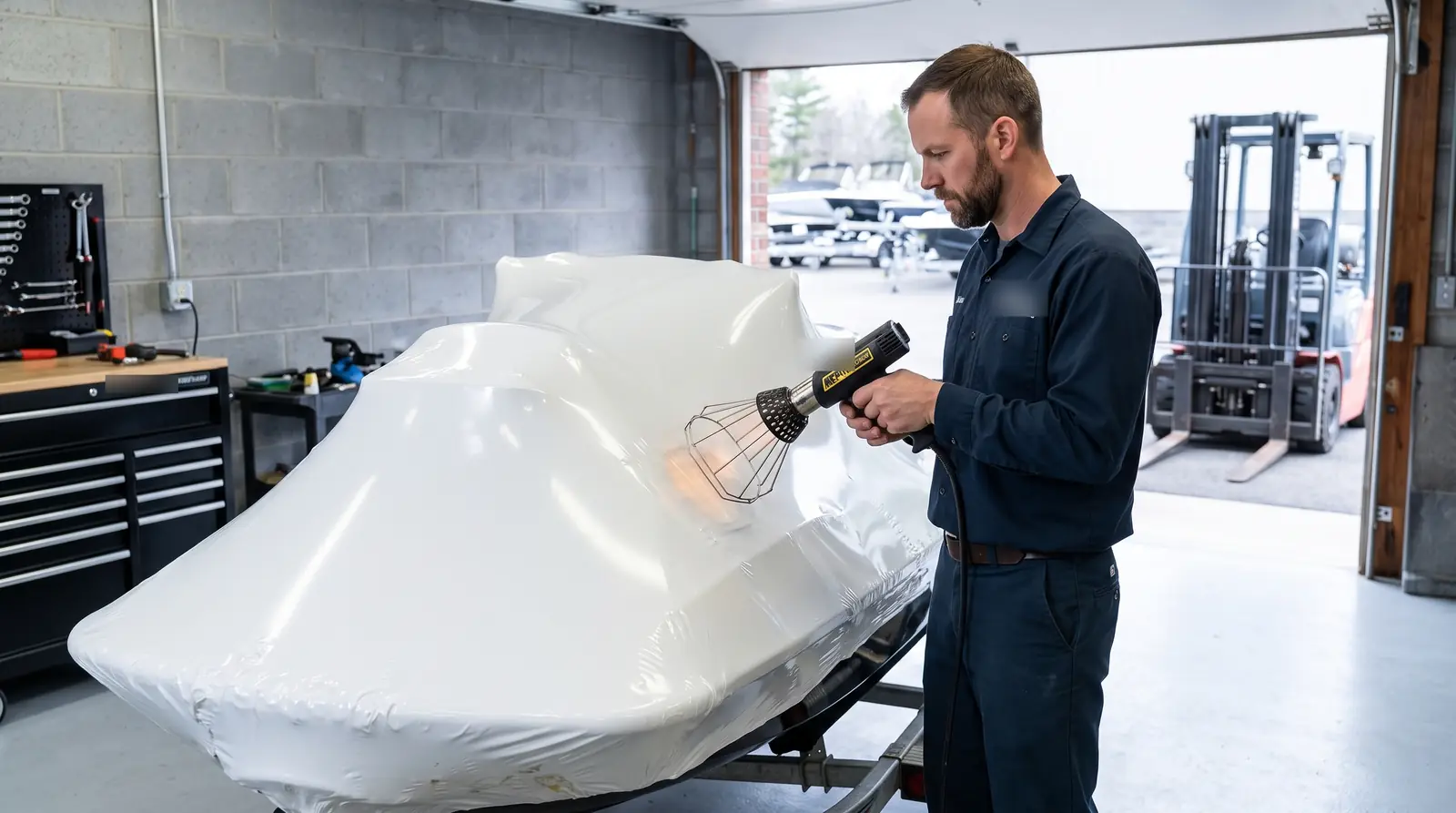 Mobile shrink wrapping
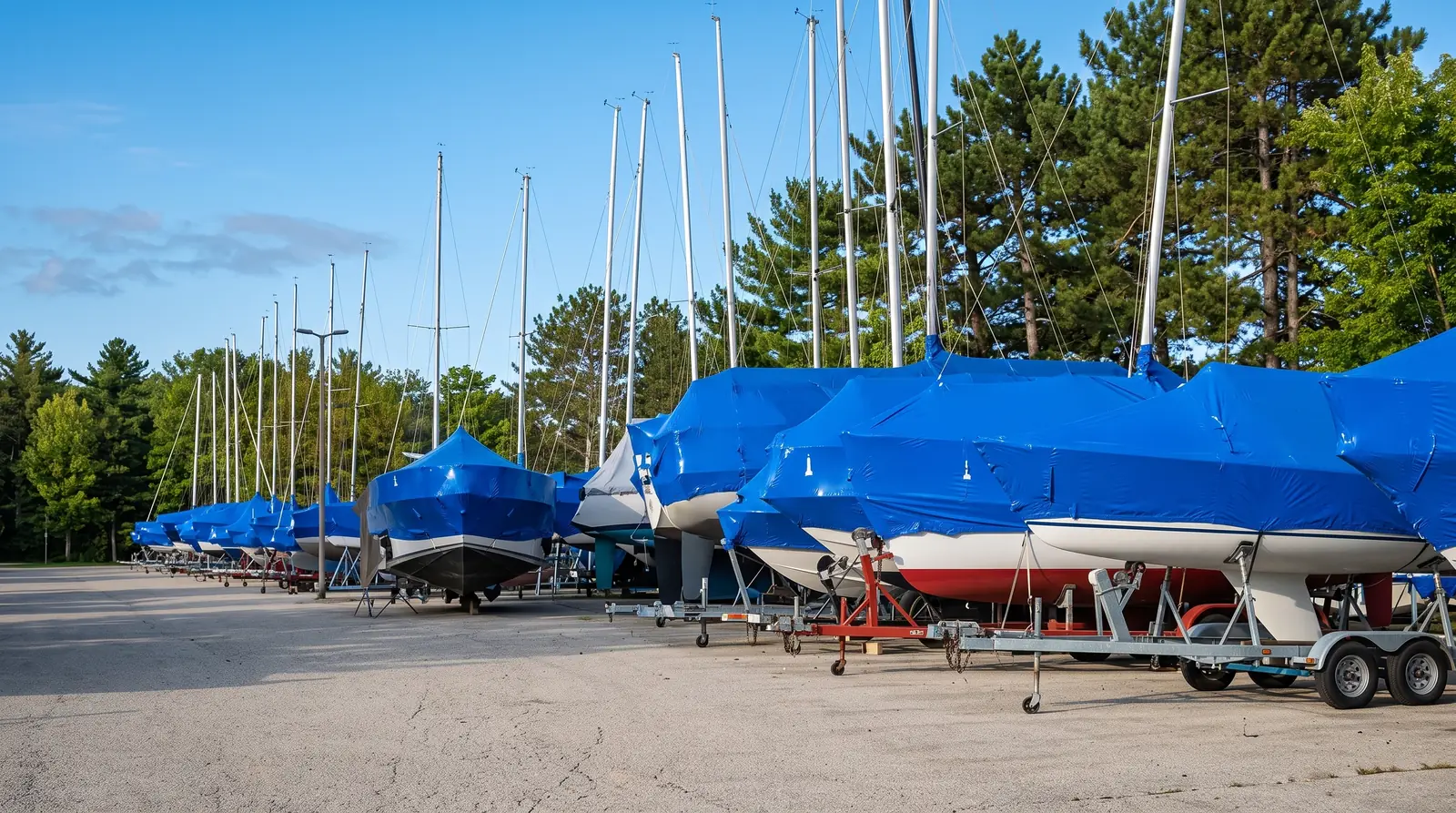 Marina & yard wraps
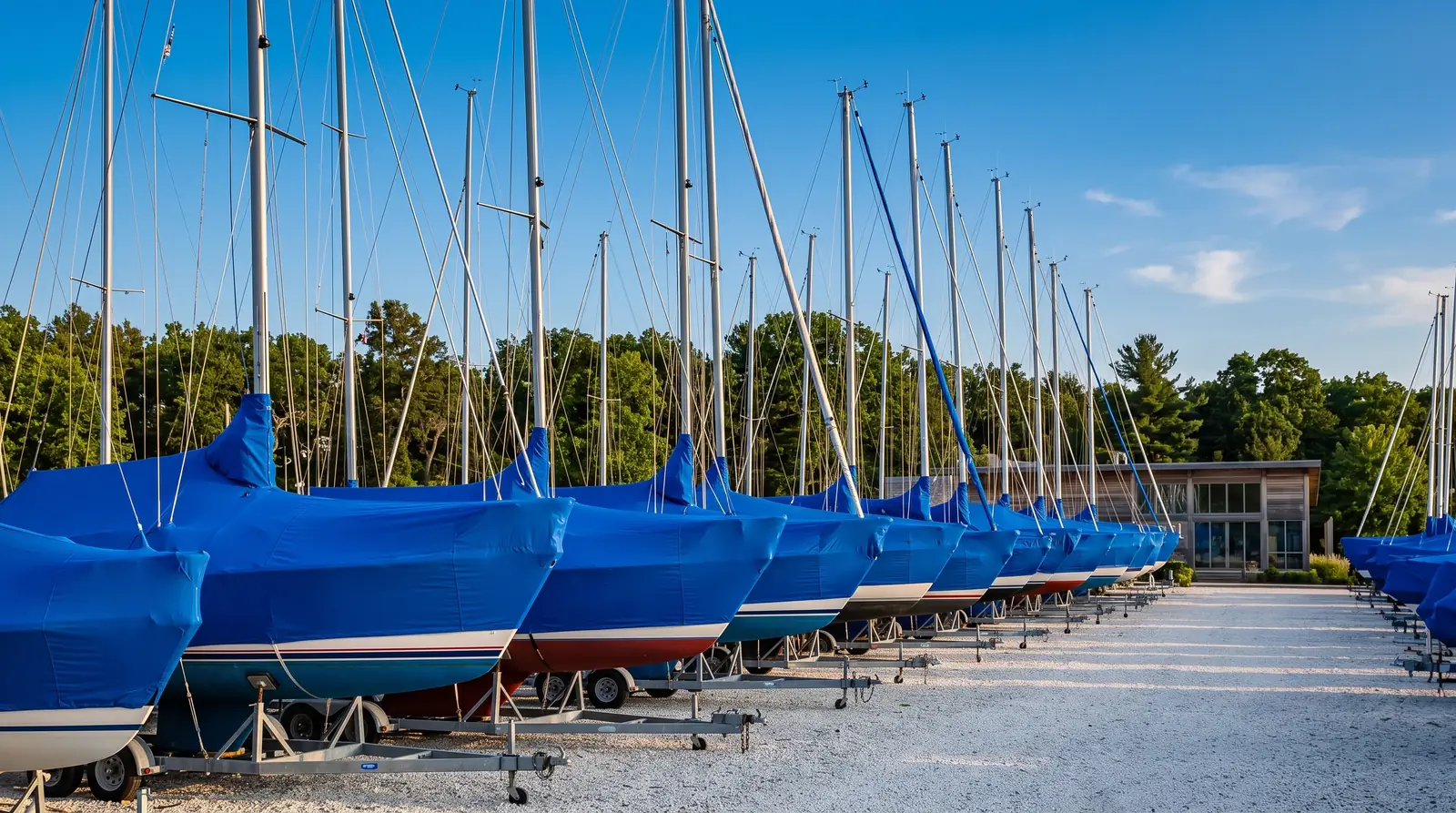 Sailboats & large boats