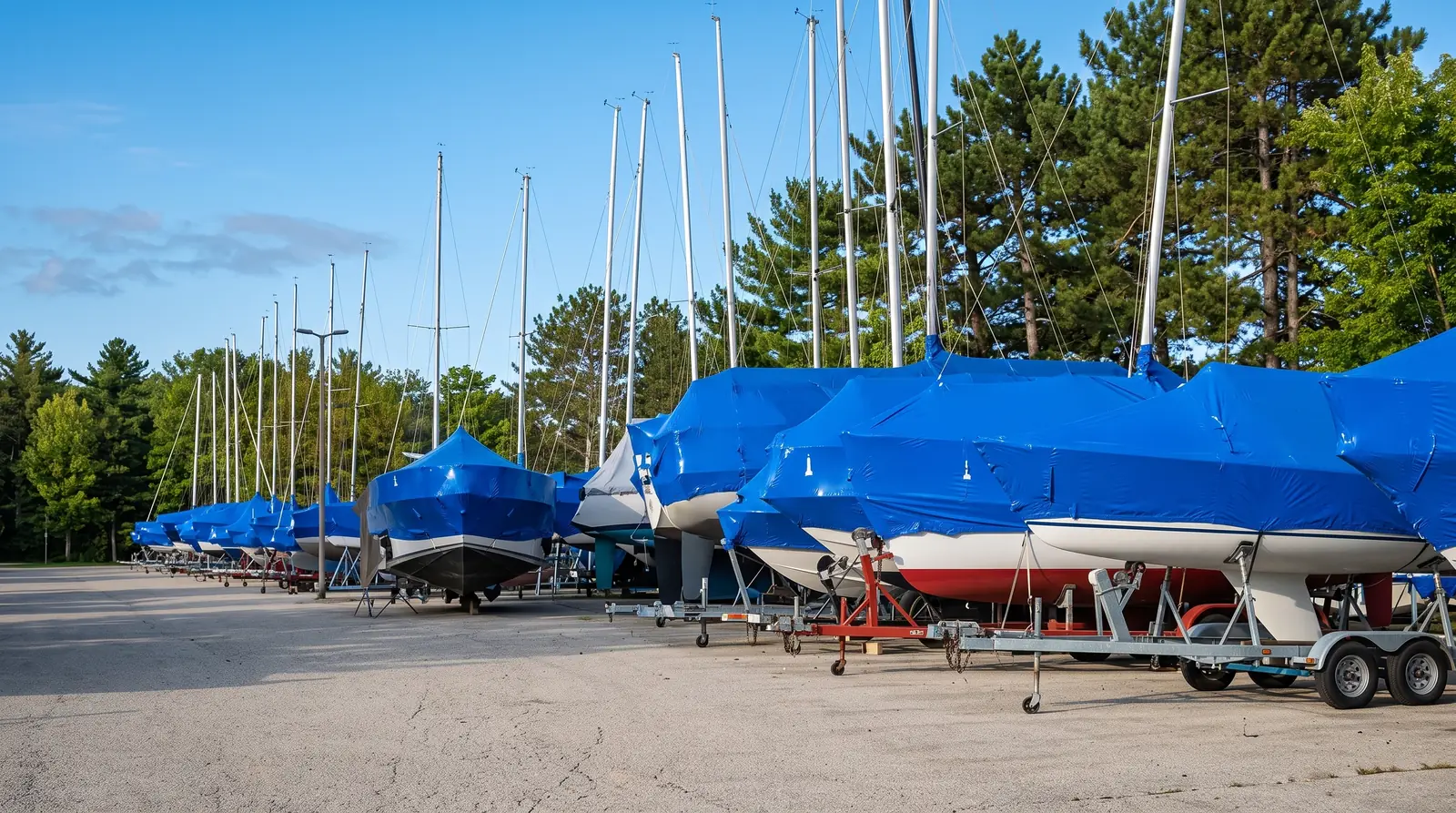
Pontoon boats are everywhere on Lake Simcoe, Lake Couchiching and the quiet bays around Tay Township, and most of them need a winter cover by mid-November. Pontoons are easy to live with in summer, but their wide, flat decks and soft furniture make them a bit different to winterize and wrap. Here is what goes into getting a pontoon ready for winter, how shrink wrapping one works, and what it typically costs.
Why pontoons need a different approach
A pontoon is basically a large, flat platform with lots of upholstered seating, a fence around the edge and often a bimini top. That shape creates a few winter challenges:
- Flat surfaces collect snow and water. Without proper framing, a cover can sag and pool water or snow.
- Upholstery and carpet hold moisture. Seats and flooring can grow mould if the boat isn’t dry and ventilated.
- The fence and rails have sharp corners. These can wear through a cover if they aren’t padded.
- The boat is wide and long. Large pontoons use more material than a runabout of the same length.
Step one: winterize the engine and systems
Shrink wrap protects the boat from snow and weather, but it doesn’t protect the engine from freezing. That job comes first.
Most pontoons run outboards, and winterizing one usually includes:
- Stabilizing the fuel and running the engine to get treated fuel through the system.
- Changing the gear oil and checking for water in the old oil.
- Fogging the engine, depending on the type.
- Draining water from the engine and checking that nothing is left to freeze.
- Greasing fittings and checking the propeller.
Pontoons with a sink, freshwater system, live well or head need those systems drained or treated too. Battery maintenance matters as well: disconnect it, charge it and store it properly.
A typical outboard winterizing runs $100–$300, and adding water systems typically adds about $75–$150. These are typical market ranges, not quotes. More detail on what’s involved is on our boat winterizing page.
Step two: prepare the deck
Before wrapping, the deck needs some attention.
- Clean and dry everything. Vacuum carpet, wipe vinyl seats and let the boat dry fully. Trapped moisture is the main cause of mould under a cover.
- Remove cushions if you can. Removable cushions are best stored indoors in a dry place. If they stay on board, prop them up so air moves around them.
- Take out loose gear. Life jackets, ropes, fenders, electronics and anything that holds moisture or might attract mice.
- Lower or remove the bimini top. Store the canvas indoors if possible.
- Open storage compartments under the seats slightly so they can breathe.
- Leave a moisture absorber or two on board if the boat is staying outside.
Step three: framing and wrapping
This is where pontoons differ most from other boats.
Framing
A good wrap on a pontoon needs a support structure underneath to create a peak, so snow and rain slide off instead of sitting on the cover. This is usually a frame of wood, plastic or metal supports running down the centre of the boat with a ridge pole or strapping.
The more pitch the frame creates, the better the cover sheds snow. A flat or low-pitched cover is the most common cause of collapsed wraps on pontoons.
Padding the fence and rails
Sharp corners on the rails, fence gates, console and ladder are padded with foam or tape before the plastic goes on. This stops the cover from rubbing through as it moves in the wind over the winter.
Wrapping
The plastic is draped over the frame and the boat, then strapped under the pontoon tubes or around the deck edge. The installer heat-shrinks it to a tight fit so it doesn’t flap or collect water.
Vents and access
Vents are added along the cover so moisture can escape. On a pontoon full of upholstery, this matters a lot. A zippered access door is optional but handy if you want to check the boat over winter without cutting the cover.
Boat shrink wrapping typically runs $12–$25 per foot. Larger and wider boats sit toward the upper end, and doors, vents and in-water wrapping are extra. If you keep your pontoon at a marina, many yards arrange wrapping for multiple boats; see marina shrink wrap for how that usually works.
Where to store a wrapped pontoon
Pontoons can be stored on a trailer at home, on a marina rack or in a yard. A few tips:
- Level the boat so water and snow don’t settle at one end.
- Support the tubes properly on the trailer or blocks so they don’t take uneven pressure.
- Keep it away from trees, which drop branches and ice in storms.
- Check it after heavy snow or high winds, especially in the first few weeks.
Common mistakes to avoid
- Wrapping a wet boat. Moisture trapped under plastic leads to mould and mildew on seats and carpet.
- No frame or a flat frame. Snow sits on the cover, and the weight can tear it or bend the fence.
- Skipping vents. Pontoons have a lot of fabric and carpet, and they need airflow.
- Leaving food or snacks on board. It attracts mice, which can chew through upholstery and wiring.
- Forgetting the engine. A shrink-wrapped boat with a non-winterized engine is still at risk.
Is it too late to wrap a pontoon in November?
Usually not. Many boats in the area are wrapped from late October through November. The goal is to have the boat winterized and wrapped before heavy snow arrives. If your pontoon is still uncovered, book soon, since late-season slots fill quickly.
Local notes for Orillia, Barrie and Tay
Orillia has a large pontoon fleet on Lake Couchiching and along the Trent-Severn and Atherley Narrows. Many owners store boats on trailers at home or at nearby marinas, and lake-effect snow can bring heavy loads, so framing matters.
In Barrie, pontoons are popular on Kempenfelt Bay and on the smaller lakes around the city. Boats stored in driveways and side yards should be checked after storms, especially if they’re near trees or on a slope.
Tay Township’s shallow, sheltered bays around Victoria Harbour, Port McNicoll and Waubaushene suit pontoons well. Many are stored at local marinas or on cottage properties close to the water, where wind off the bay can work on a loose cover.
Quick answers
How much does it cost to shrink wrap a pontoon boat?
Boat shrink wrapping typically runs $12–$25 per foot. Larger and wider pontoons tend to sit toward the upper end, and doors, vents and in-water wrapping are extra. These are typical ranges, not quotes.
Do I need a frame to shrink wrap a pontoon?
Yes. A frame or support structure creates a peak so snow and rain slide off. Without one, the flat deck lets snow and water collect on the cover, which can lead to tears or damage.
Should I take the cushions off my pontoon for winter?
If you can, yes. Storing cushions indoors keeps them dry and away from mice. If they stay on board, prop them up so air can move around them, and make sure the wrap has vents.
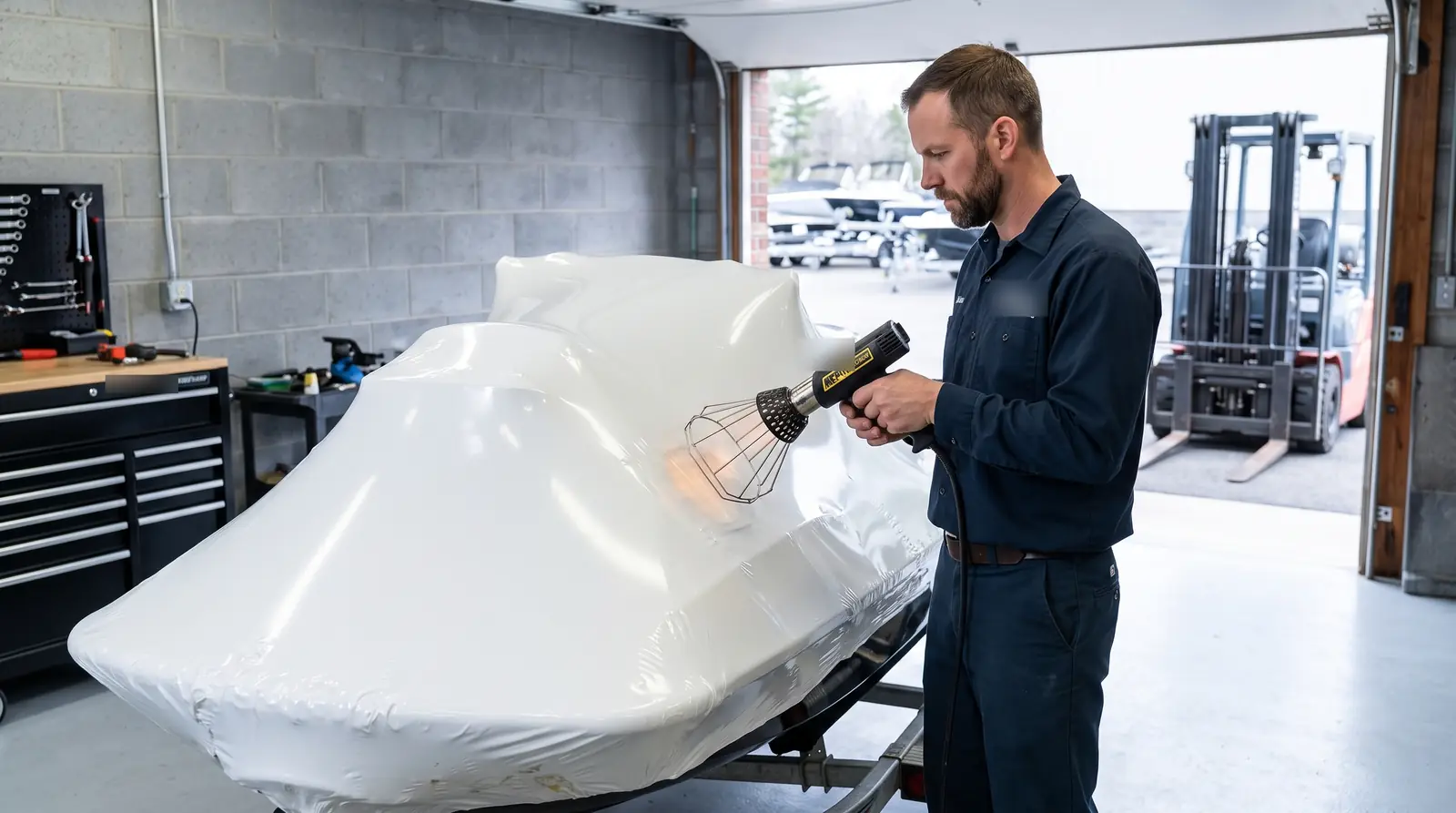 Mobile shrink wrapping
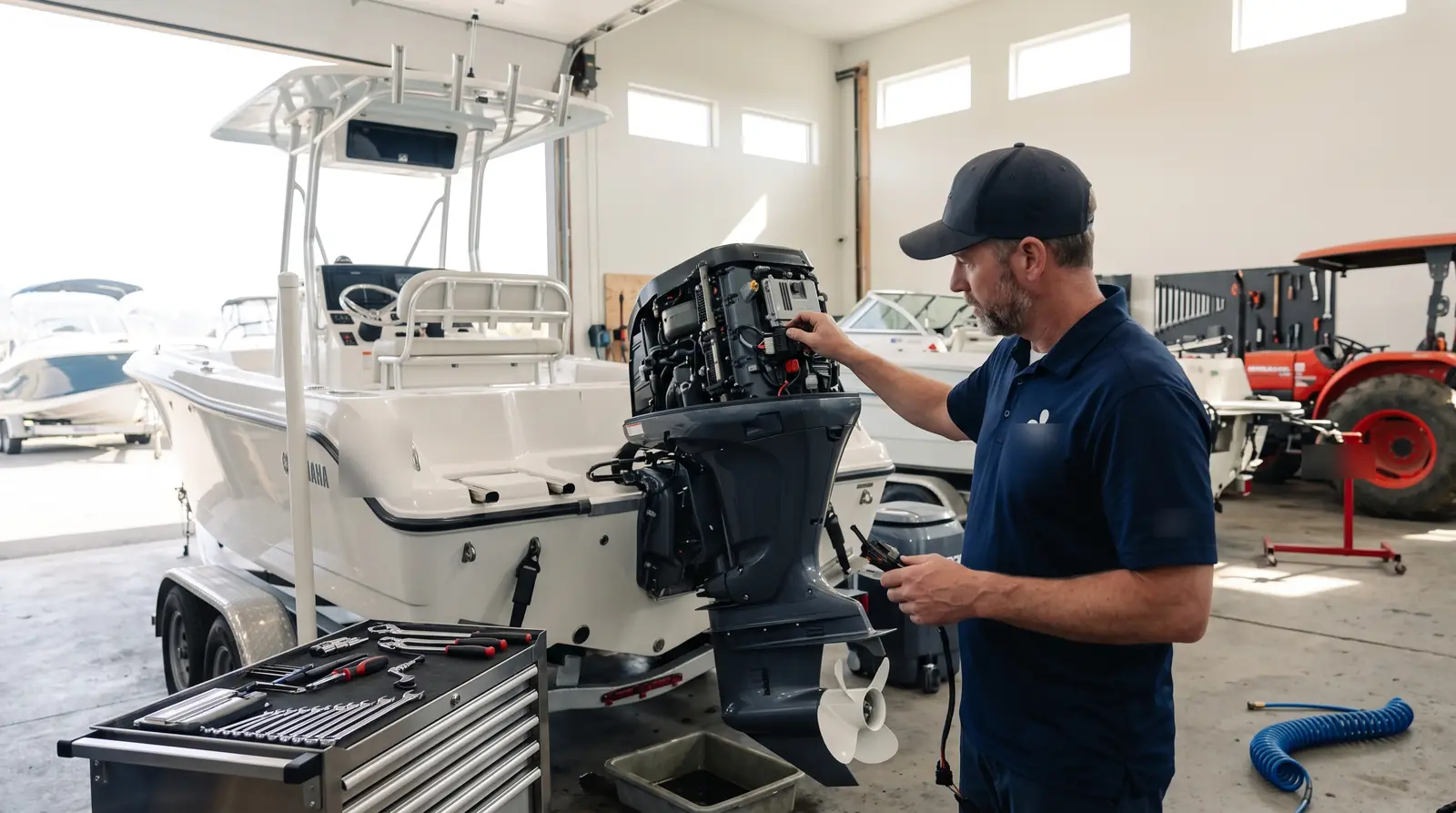 Engine winterizing