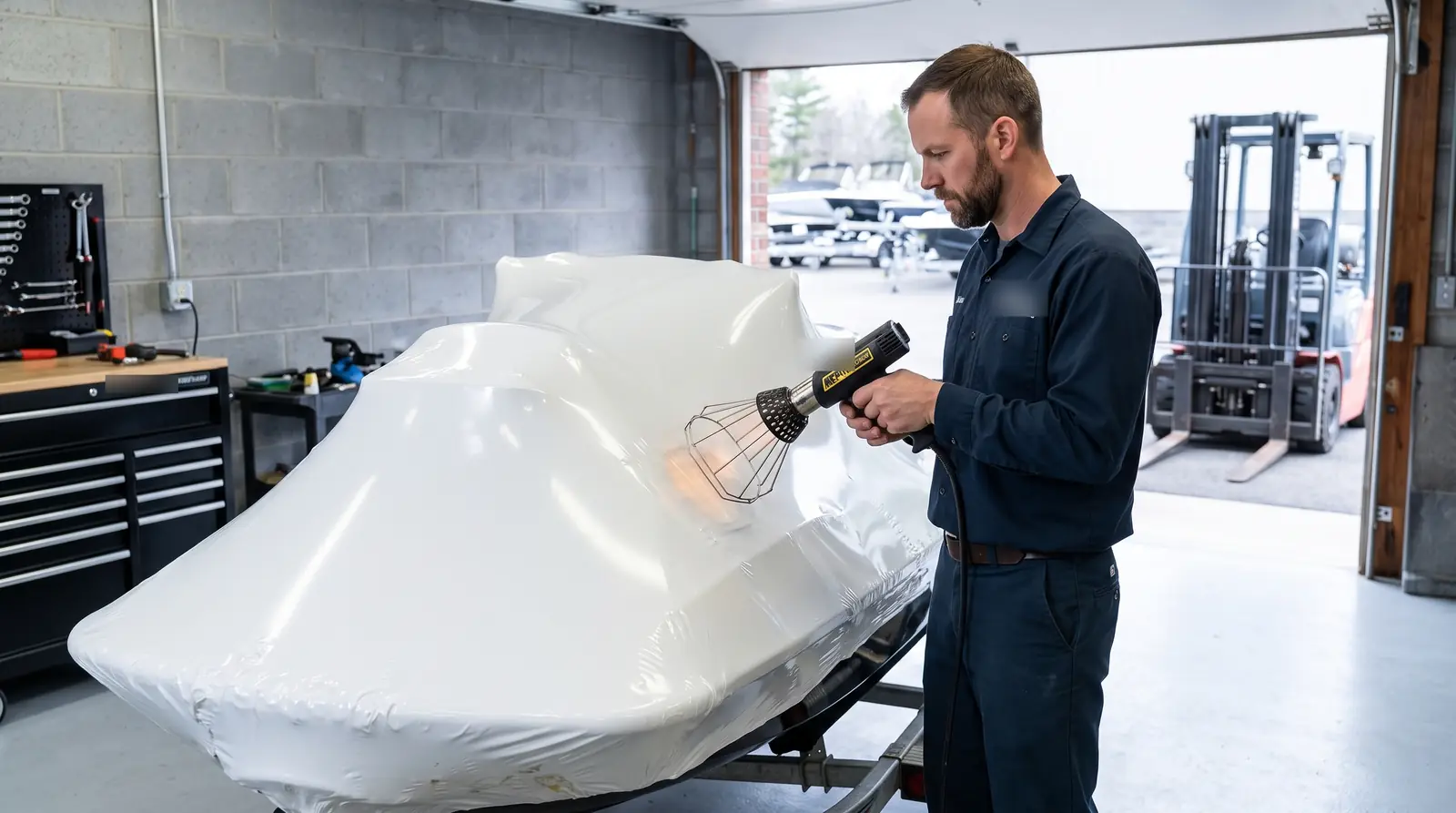
Not every boat spends the winter at a marina. Lots of owners around Wasaga Beach, Collingwood and Barrie store their boat on its trailer in the driveway, beside the garage or out back on the property. For those boats, mobile shrink wrapping brings the wrap to you. Here is how it works, what you need to have ready, and how to keep the wrap in good shape until spring.
How mobile shrink wrapping works
A mobile shrink wrap service comes to wherever the boat is stored. The installer builds a support frame over the boat, drapes shrink wrap plastic over it, secures it around the hull, then heats the plastic with a propane heat gun so it shrinks tight.
Most jobs follow the same steps:
- Check the boat. The installer looks at the size, shape, windshield, towers and anything sticking up.
- Build the frame. Straps, poles or a wood or plastic frame create a peak so snow and water run off.
- Pad sharp points. Corners, cleats and the windshield get padded so they don’t tear through the plastic.
- Put the band on. A strap runs around the hull below the rub rail as the anchor for the wrap.
- Drape and heat. The plastic goes on, is tucked around the band, and is heat-shrunk tight.
- Add vents and extras. Vents help with moisture. A zipper door is common if you want access over winter.
For a typical trailered runabout, the wrapping itself is often done in a short visit. Bigger boats, towers and custom frames take longer.
What you need on site
Space around the boat
The installer needs room to walk all the way around the boat and work with a ladder. A clear strip of a few feet on every side is a good starting point. Ask the service what they need for your boat size.
If the boat is tight against a fence, a garage wall or a hedge, move it before the appointment if you can.
Safe distance from buildings
Shrink wrapping uses an open-flame heat gun. Installers are trained to work safely, but it helps to keep the boat away from:
- Siding, eaves and wooden fences
- Dry leaves, brush and piles of wood
- Fuel cans, propane tanks and anything flammable
If the boat is inside a garage or under a carport, mention it when you book. Many installers prefer to wrap outdoors, or will ask about ventilation and clearance before they agree to do it inside.
Level, stable footing
A boat on a trailer should be level and properly supported, with the wheels chocked. If the trailer sits on soft lawn, the ground can shift as it freezes and thaws over winter.
Access for the truck
The installer will usually park nearby and carry gear to the boat. Let them know about steep driveways, locked gates, dogs and where to park.
Prep before the installer arrives
Wrapping should happen after the boat is fully winterized, not before. Once the plastic is on and tight, getting back in to finish the engine or water systems is a hassle.
Before the appointment:
- Winterize the engine and water systems. See our boat winterizing checklist or book boat winterizing before the wrap goes on.
- Clean and dry the boat. Remove leaves, dirt and standing water. Moisture trapped under plastic leads to mildew.
- Take out cushions and electronics if you can, or prop cushions up so air can move.
- Lower or remove what you can. Biminis, flagpoles, antennas and fishing gear.
- Charge or remove the battery, depending on your plan for winter.
- Point the bow so the boat is easy to work around, and so the zipper door, if you get one, is where you want it.
- Tell the installer about towers, windshields and covers when you book, so they bring the right supports.
When to book
Mobile shrink wrap slots fill up in the fall, just like marina wrapping. In this area, wrapping usually happens from late October through November, after haul-out and winterizing and before the first heavy snow.
Booking in September or early October gives you the most choice of dates. If you’re calling in late October or November, ask about the next open slot and be ready to have the boat prepped on short notice.
Shrink wrap shrinks best on a dry day that’s not too cold. Rain, high wind and freezing temperatures can push a job back.
What it typically costs
Boat shrink wrapping is typically $12–$25 per foot. Smaller boats sit at the low end. Doors, vents and in-water wrapping are extra. Those are typical ranges, not quotes.
For mobile service, the final price also depends on:
- The length and shape of the boat
- Towers, T-tops, windshields and anything that needs a custom frame
- Extras like a zipper door or additional vents
- How far the installer has to travel and how easy the site is to work on
For sailboats, see sailboat shrink wrap, which has its own considerations about the mast.
Shrink wrap vs a tarp at home
Some owners storing at home wonder whether a tarp is good enough. A tarp is cheaper up front, but it flaps in the wind, can rub the finish, and often lets snow and water pool. Shrink wrap fits tightly and sheds snow when the frame is built well. Our shrink wrap vs tarp guide compares the options in detail.
Looking after the wrap over winter
A boat stored at home doesn’t have marina staff walking past it. Check on it yourself every so often, especially after:
- Heavy snow. Brush snow off gently by hand or with a soft broom. Never use a shovel or anything sharp on the plastic.
- Strong wind. Look for loose spots, tears or a band that has slipped.
- Thaws and rain. Look for water pooling on flat spots, which means the frame may have sagged.
Small tears can often be patched with shrink wrap tape. A big tear or a collapsed frame should be fixed quickly, before snow and water get inside.
In spring, the plastic comes off, and most shrink wrap can be recycled. Ask your installer whether they take it back or where to drop it off.
Local things worth knowing
- Wasaga Beach: many boat owners store at home on larger lots, and blowing sand and leaves can collect around the trailer. Clear the area before the wrap goes on. See the Wasaga Beach area page.
- Collingwood: heavy lake-effect snow off Georgian Bay can pile up quickly, so a well-built peak and regular snow checks matter. See the Collingwood area page.
- Barrie: boats stored in subdivisions may be close to houses and fences, so plan for clearance around the boat. Check any neighbourhood or property rules about storing a boat on a driveway. See the Barrie area page.
Quick answers
Can a boat be shrink wrapped in my driveway?
Yes. Mobile shrink wrap services come to your driveway, yard or storage spot. They need room to work all the way around the boat and a safe distance from buildings and anything flammable.
Should I winterize before or after shrink wrapping?
Before. Winterize the engine and water systems first, then wrap. Getting back under tight shrink wrap to finish winterizing is difficult.
How long does shrink wrap last over a winter?
A well-installed wrap usually lasts the whole season if it’s checked after heavy snow and wind and small tears are patched quickly. It’s typically replaced each year.
 Engine winterizing
 Marina & yard wraps