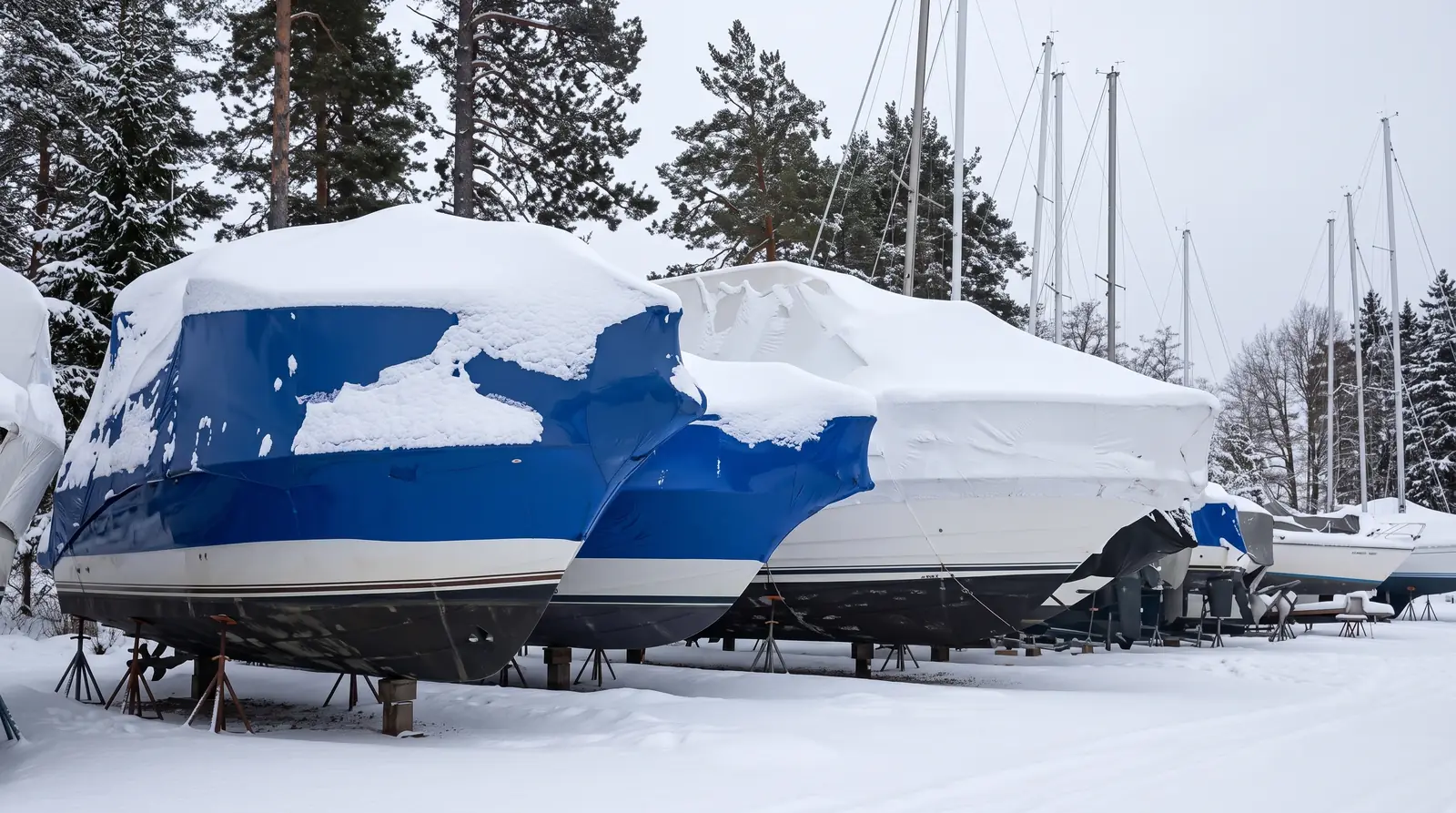
Every fall, Georgian Bay boat owners face the same choice: shrink wrap, a tarp, or a custom canvas cover. All three can get a boat through winter, but they handle snow, wind and moisture very differently. Here is how they compare, what each one costs over a few seasons, and how to time it all between haul-out and the first real snowfall.
What a Georgian Bay winter asks of a cover
A winter cover around here has three jobs.
- Carry and shed snow. Lake-effect snow off Georgian Bay can pile up fast, especially around Midland and the eastern shore. Snow that sits on a flat or sagging cover gets heavy, and wet spring snow is heavier still.
- Stay put in the wind. Boats stored near the shore in Wasaga Beach, Collingwood or Penetanguishene take strong wind off open water. Anything that flaps will wear through, and anything loose can let snow and water in.
- Let moisture out. A boat sealed up tight with no airflow can grow mould and mildew on upholstery, carpet and wood over the months it sits. A good cover keeps water out but lets damp air escape.
The three options compared
Tarp
A tarp is the cheapest and fastest way to cover a boat. It also does the worst job of the three.
- Snow: a tarp draped over the boat tends to sag between supports, so snow and meltwater pool on top. That weight can stretch the tarp, tear grommets or stress the windshield and canvas below.
- Wind: tarps flap, which rubs the gelcoat and loosens tie-downs.
- Moisture: tarps aren’t built with vents, and condensation can collect underneath.
A tarp can work for a small boat in a sheltered spot, especially over a simple peaked frame. In an open driveway or cottage lot, it is the option most likely to need attention all winter.
Shrink wrap
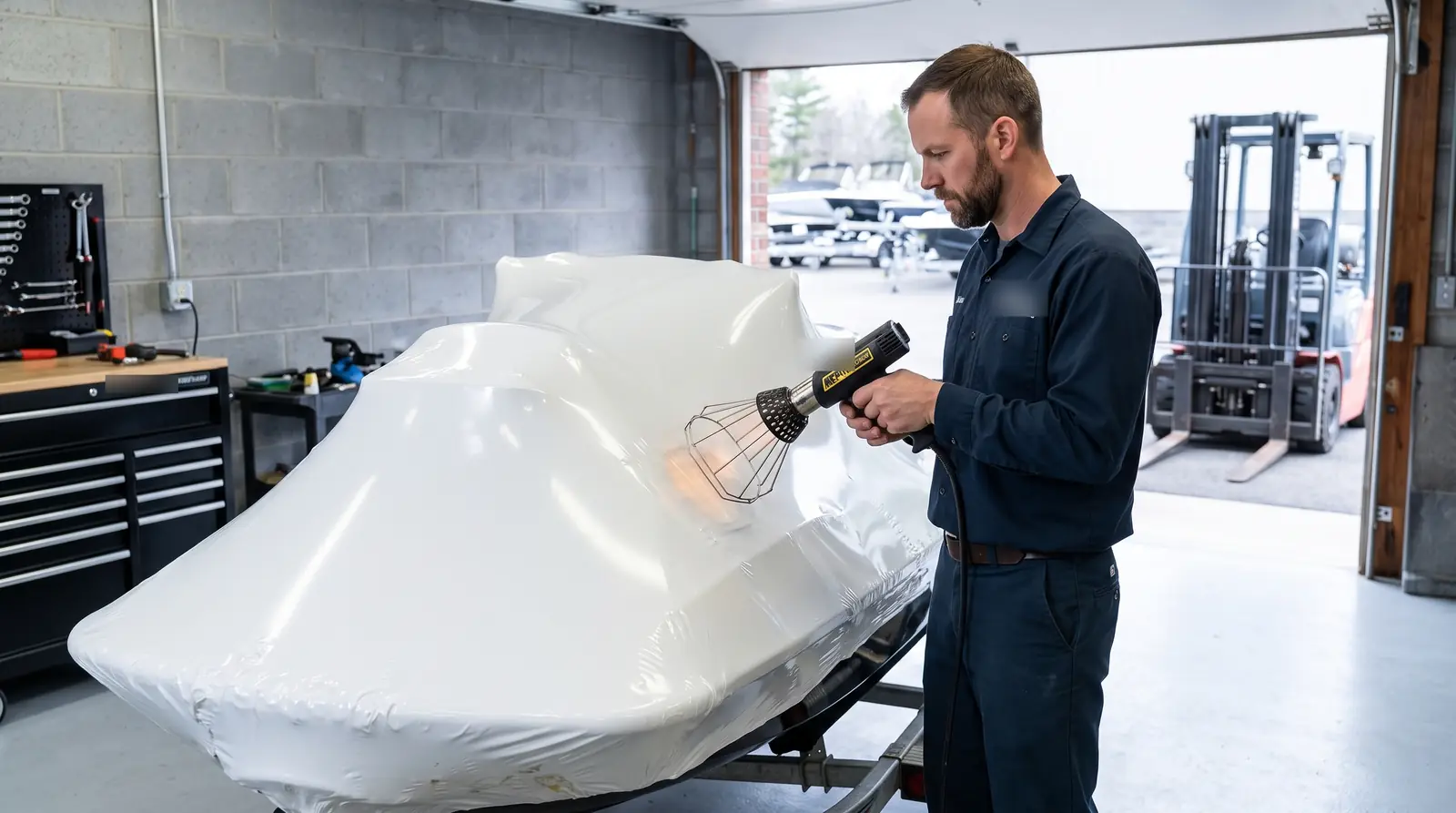
Shrink wrap is marine-grade plastic film stretched over a support frame and heat-sealed tight to the hull.
- Snow: the frame creates a peaked roof, so snow slides off instead of building up.
- Wind: because it is shrunk tight and strapped around the hull, there is very little loose material to flap.
- Moisture: vents are built into the wrap to let damp air out and reduce mould and mildew.
The trade-off is that shrink film is a one-season product. It comes off in spring and can usually be recycled, and you pay for a new wrap each fall. A well-built frame can often be labelled and reused. See mobile boat shrink wrapping for what a typical job includes.
Custom canvas cover
A custom canvas cover is made to fit your specific boat. It looks good, goes on and off without tools, and can last several seasons with care.
- Snow: canvas needs a frame or support poles underneath to shed snow. Without one, it can sag and pool just like a tarp.
- Wind: a well-fitted cover with good tie-downs holds up well. A loose or worn one will flap.
- Moisture: quality marine canvas breathes, which helps with condensation.
The catch is upfront cost and upkeep: seams and zippers wear, and the cover must be dry before it is folded away. Prices vary widely by boat and fabric, so get a quote from a canvas shop.
Side-by-side
| Tarp | Shrink wrap | Custom canvas | |
|---|---|---|---|
| Sheds snow | Poorly unless framed | Yes, with frame | Only with frame or poles |
| Handles wind | Flaps and wears | Tight, little movement | Good if well fitted |
| Moisture control | Little or none | Built-in vents | Breathable fabric |
| Lifespan | A season or two | One season (frame reusable) | Several seasons with care |
| Winter checks needed | Frequent | After big storms | After big storms |
Cost over several years
Only shrink wrap has a reliable published price range to quote here. Typical market rates for boat shrink wrapping are about $12–$25 per foot, with smaller boats at the low end. Doors, extra vents and in-water wrapping cost extra. For sailboats, the range is similar, plus roughly $2–$3 per foot if the mast stays up. These are typical ranges, not quotes.
Because you pay for shrink wrap every season, it helps to think in multi-year terms:
- Shrink wrap is a yearly cost. Multiply your per-foot price by the boat length, then by the number of seasons you plan to keep the boat.
- A custom canvas cover is a larger upfront cost spread over the years it lasts, plus repairs and a frame if needed.
- A tarp is cheap, but damage from pooled snow or mildewed upholstery can cost far more than it saved.
If you plan to keep the boat for many years and store it somewhere sheltered, a canvas cover can make sense. If the boat sits outside in the open, shrink wrap is usually the most reliable choice for a Georgian Bay winter.
When shrink wrap is worth it
Shrink wrap tends to earn its cost when:
- The boat stores outside, in a driveway, cottage lot or marina yard
- You’ve had a tarp tear or pool snow in past winters
- The boat has a windshield, tower, bimini or canvas that could be damaged by snow load
- You want to keep mice, leaves and debris out
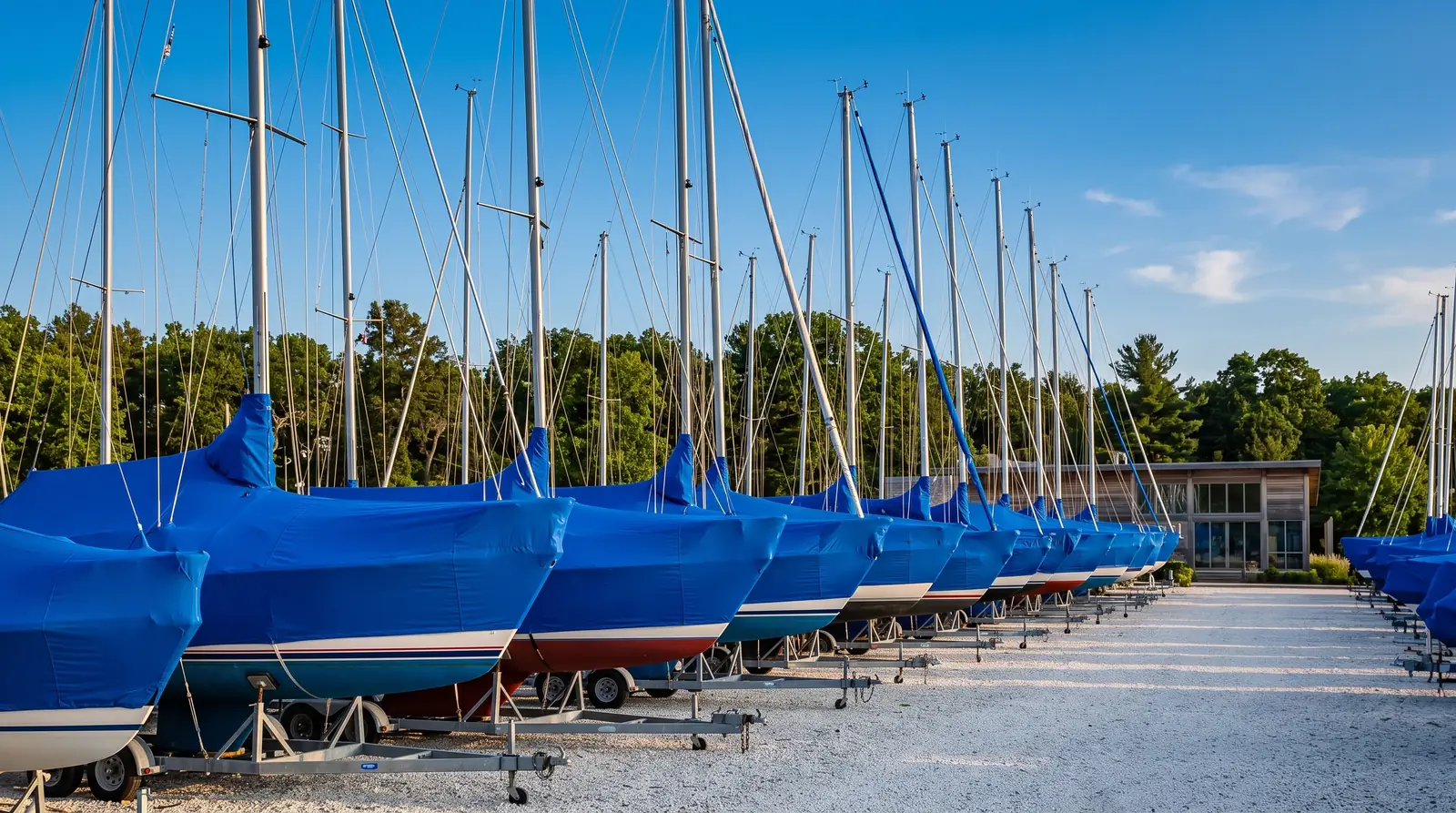
Sailboats and cruisers with masts, cockpits or tall canvas need a custom-built frame. That is covered on the sailboat and cruiser shrink wrap page.
Outdoor vs. indoor storage
Indoor storage protects the boat from snow, wind and sun altogether. The downsides are cost, availability and trailering the boat there, and indoor spots near the bay fill early.
Outdoor storage at home or at the cottage is cheaper and keeps the boat close by, but it depends entirely on the cover. In Wasaga Beach, many boats spend the winter on a trailer in the driveway, which is exactly where a mobile wrap works well. In Midland, heavier lake-effect snow makes a strong frame and a steep roof especially important.
Prep before any cover goes on
Whatever cover you choose, the boat should be ready before it is closed up.
Winterize first
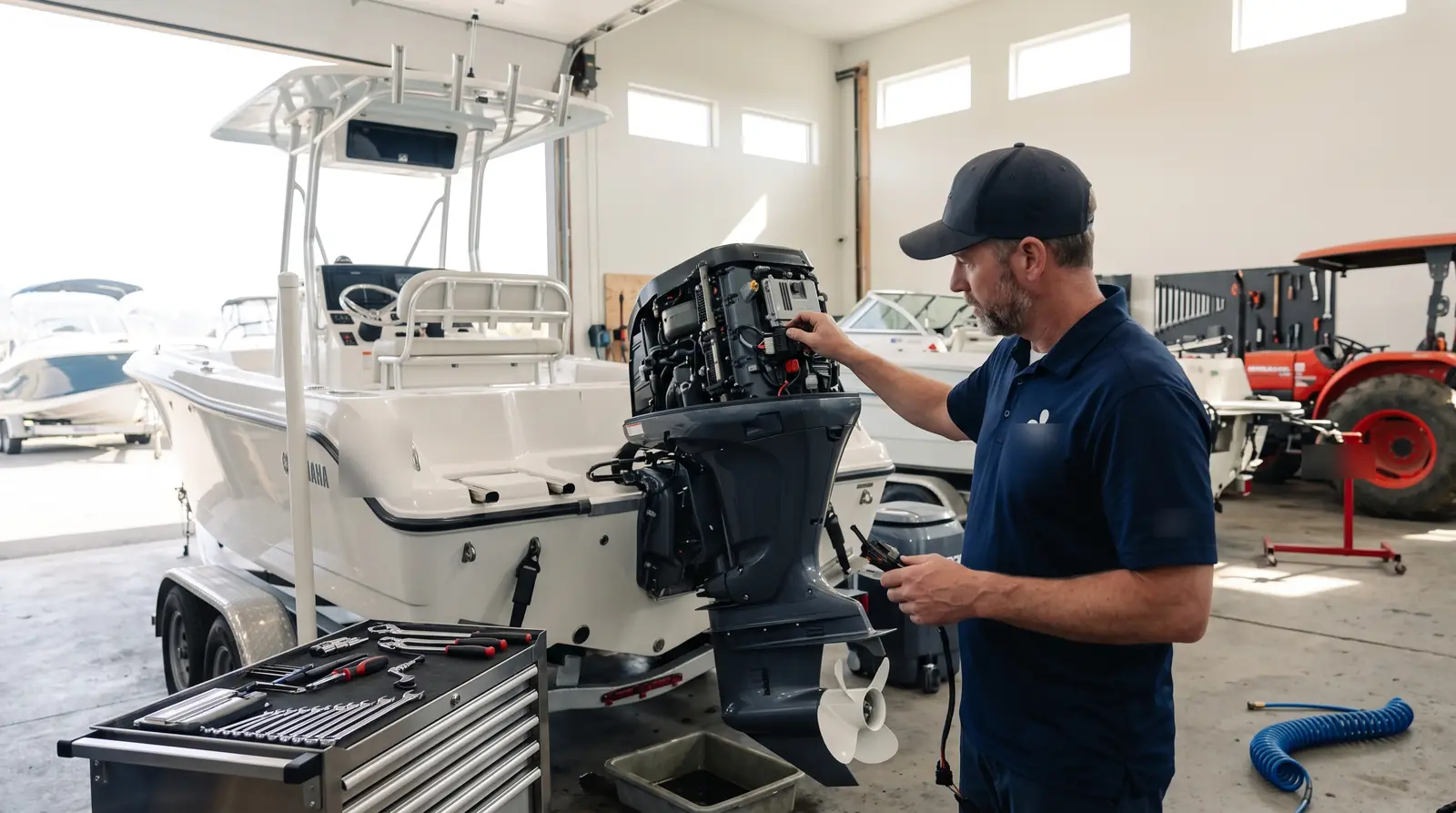
Water left in the engine block or lower unit can freeze and crack it, and untreated fuel goes stale over winter. Winterizing should always come before wrapping, because getting to the engine is much harder once the wrap is on. Typical ranges are $100–$300 for outboards and $250–$800 for sterndrives and inboards, with water systems adding roughly $75–$150. More on boat engine winterizing.
Clean and dry the boat
- Remove food, drinks and anything that might attract mice
- Take out or prop up cushions so air can move around them
- Pump out bilge water and dry the interior
- Disconnect or remove the battery
Timing: from haul-out to first snow
On southern Georgian Bay, the usual sequence looks like this:
- September: book wrapping and winterizing. Late-season slots fill first.
- October: haul out, then winterize the engine and water systems before the first hard frost.
- Late October to November: wrap after winterizing and before the first heavy snow.
- December to March: check the wrap after heavy snow or strong wind.
- April to May: unwrap, recycle the plastic and get ready for launch.
Wrapping soon after haul-out keeps leaves and early snow out from the start.
Quick answers
Is shrink wrap better than a tarp for winter boat storage?
For a boat stored outside on Georgian Bay, usually yes. Shrink wrap is framed, tight and vented, so snow slides off, there is little to flap in the wind and moisture can escape. A tarp tends to sag, pool snow and wear against the hull.
How much does it cost to shrink wrap a boat?
Typical market rates are about $12–$25 per foot, with smaller boats at the low end. Zipper doors, extra vents and in-water wrapping are extra. Your provider will price it based on length, height and any towers or canvas.
Can I shrink wrap my boat before winterizing it?
It is best not to. Winterize the engine and water systems first, because once the wrap is on, getting to the engine means cutting a door or opening the wrap.
 Mobile shrink wrapping
 Engine winterizing
 Sailboats & large boats